Showing posts with label gourmet. Show all posts

Friday, February 26, 2010

Oven Poached Fish in Olive Oil


I have mixed feelings about the month of February. I mean sure, my birthday is in February, so that's usually pretty fun, but it's just so dreary sometimes, you know? On the other hand, it's so short! It's over so fast! But then again, that's a bad thing, too. Rent is due faster than you expect. March sneaks up on you. Here it is the two days before the end of February and I was all, oh, I've got time for my Gourmet Unbound post, it's only the 26th.

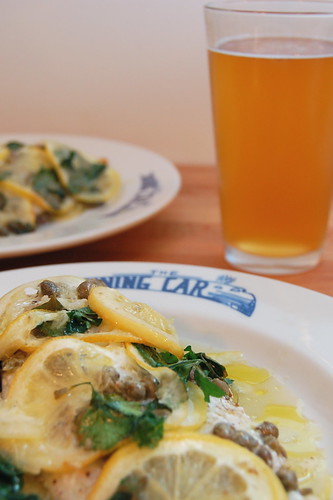
HA! Not so. Luckily, I glanced at the calendar at 4:45 this afternoon and noticed the rapidly approaching deadline.  I have lots of baking planned for the weekend, so I wanted to do something quick and easy from Gourmet for tonight's dinner. This oven poached fish in olive oil fit the bill.


As is my wont, I tweaked a tiny bit. Mostly since it was just the two of us for dinner tonight, so I cut the original recipe in half. I didn't garnish with more parsley at the end (gasp!), and I served the fish over a huge pile of spinach. And I do mean huge; we ate an entire 10 oz bag between us. You know that squidgy, frictiony feeling you get on your teeth after eating spinach or lemon? Big time. But worth it.
 
This recipe is dead simple, the only thing is that it takes an hour for the fish to poach, so start it right when you get home from work.  I waited until the fish was done, then sauteed a bag of spinach (washed, stems removed) in a few spoonfuls of oil from the fish pan. There will be plenty of leftover lemony, capery, fishy oil, when I come up with a way to use it in the next couple of days (salad dressing?) I'll let you know in the comments.


It's a layering game from the bottom up: start with the less attractive lemon slices (about half), then the fish, then salt and pepper, then capers, the pretty lemon slices and parsley. I wasn't sure whether to chop the parsley or not, but when it came out of the oven and a few of the parsley leaves were crispy from sitting up above the bath of olive oil. I see no problem with that at all.


Oven Poached Fish in Olive Oil
Gourmet, March, 2000


Don't be intimidated by the cup of olive oil. Very little of it sticks to the fish, so there's a ton left in the pan.

two fillets of cod, halibut or another white fleshed fish
1 cup olive oil
1 lemon, sliced as thinly as you can manage
3-4 tablespoons capers, rinsed if salt-packed
1/4 cup flat leaf parsley
salt and pepper

Preheat the oven to 250˚F.

Pat fish dry, and let sit at room temperature for 10 minutes to take the chill off (say, while you slice the lemon). Line an 8x8 inch baking dish with the least attractive half of your lemon slices. Lay the fish over the lemon slices.

Coarsely chop half the capers, then mix them back in with the whole capers, and sprinkle them over the fish. Top this with the prettier half of your lemon slices, then the capers, prettier lemons, and parsley. Stick it in the oven for an hour. If you're cooking 4 filets you may need an hour and fifteen minutes, but either way, cook it until the fish is flakey and cooked through.

Sunday, January 31, 2010

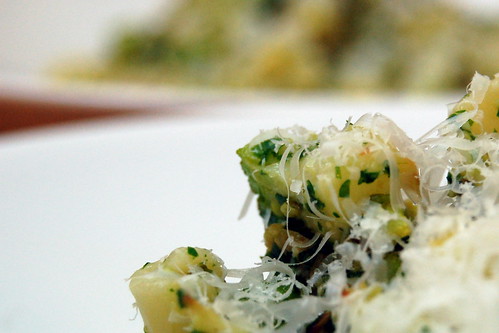
Pasta with Parsley Sauce and Cauliflower

We spent the first couple of weeks of January doing our best to be real vegetarians. We don't eat that much meat anyway and we were... ok at it. I think we'll do it again this summer when we have greens coming out our ears from our CSA in June or in September when all I want to eat is tomato sandwiches, but in January it's a bit of a challenge (so kudos to Andrew and Cara who made it the entire month!) Particularly when everyone around you is eating hot dogs and you LOVE hot dogs but you eat a veggie burger instead. Le sigh.

There are lots of people who will happily get into the politics and morals of why you should or shouldn't eat meat, and for us it wasn't 100% an ethical thing, though our reasons were many: quality, ethically raised meat is expensive. It's not great for the planet. It's easy to eat too many calories if you're eating meat. In general, vegetables are lower in fat and higher in fiber. We are back to eating meat a couple of times a week, but we haven't set up strict guidelines. If you're not already, have you ever "gone veg" for a week or a month at a time? How'd you do? What surprised you?

I cooked out of Vegetarian Cooking for Everyone a lot (those curried parsnips were a standout, as well as a mushroom pot pie that I really need to tell you about) and then we bought this weird green cauliflower. It must have been a hybrid brocco-flower type thing, because the florets weren't quite as compact as white cauliflower. I ignored the weirdness and adapted a pasta recipe from Gourmet,  just in time for February's Gourmet Unbound. In the original, you are supposed to steam the florets but it was cold in my kitchen and I wanted to turn on the oven and roasted vegetable is almost always tastier than steamed vegetable... so I roasted it. I took a look at the parsley sauce and said, oh, that's basically a pesto without nuts and garlic. Since I had pine nuts and garlic, I incorporated those. And because raw garlic is often too sharp for my taste and I already had the oven on, I roasted a few cloves with the cauliflower before whizzing them into the sauce. Top the plate with a little snowstorm of parmesan cheese, or skip it if you're vegan.


Pasta with Parsley Sauce and Cauliflower
adapted from Gourmet, February 1993
serves 4

2 1/2 cups packed fresh parsley leaves
small handful pine nuts, toasted (about 1/3 cup)
2/3 cup olive oil
3-4 large cloves garlic, unpealed
1 large head of cauliflower (about 2 1/2 pounds), cut into 1-inch flowerets and the stems sliced thin
3/4 pound campanelle or rotelle pasta (something with a ruffly edge, please)
1 cup pimiento-stuffed olives, chopped fine
salt and pepper
Parmesan cheese 

Heat the oven to 375 while you chop the cauliflower into florets. Toss florets and unpeeled garlic cloves with a couple of tablespoons of olive oil, a teaspoon or so of salt, and a bit of pepper. Spread on a sheet pan (one with sides) and roast, stirring once or twice for 20-25 minutes until cauliflower is tender with some brown spots.

While the cauliflower roasts, wash the parsley and separate the leaves from the stems. (You can stick the stems in a freezer bag and freeze them for making stock later, if you're into that sort of thing.) Toast the pine nuts in a dry skillet over medium heat, tossing frequently and taking them off the heat and out of the pan just when you start to smell them. Do not turn your back on pine nuts, because they go from toasty to charred in a matter of seconds and charred is burnt and burnt is bad. Grab the garlic cloves (use tongs) from the roasting pan in the oven after about 20 minutes, leave the cauliflower in for 5 more minutes if it's not done. Remove the skins, the cloves should be soft and squishy, if not entirely spreadable.

Meanwhile, bring a large pot of salted water to a boil for the pasta. Start the pasta going when the cauliflower has about 10 minutes left, and cook just to al dente, then drain. Save a cup or so of the pasta-cooking water in case you need it to thin out the pesto.

For the parsley pesto, in a blender or food processor (or the tiny attachment to the stick blender, which is my new favorite kitchen toy), puree the parsley leaves, roasted garlic cloves, toasted pine nuts, 1/2 teaspoon of salt, 1/4 teaspoon pepper and 1/2 cup of olive oil. Stop and scrape the sides, and if necessary add another glug of olive oil. Process again, until you  have a pesto-like sauce.

To serve, toss pasta with parsley pesto, cauliflower and olives, top with parmesan cheese.

Sunday, December 27, 2009

Baked Cheddar Olives


Oh my goodness. Has it seriously been NEARLY A MONTH since I told you about sweet potato latkes? My friends, it appears December has gotten the better of me.

No no, it's not that I haven't been cooking! It's the holidays; I most certainly have been cooking, and I've done a LOT of baking.  I made these sweet, sharp, unstoppable ginger chocolate chip cookies no fewer than four times. Those cardamom pistachio cookies over on The Wednesday Chef? Twice. They're subtle, mysterious, and a great foil for the in-your-face combo of peppermint and white chocolate we are often assaulted with this time of year. I've made at least five loaves of dill bread. I made three panettone: one for my Sicilian landlord, one for my mom, and one for my Nonna. I made a blueberry pie for Christmas dessert, and we ate it with my mom's homemade chocolate chip ice cream. For Christmas dinner, we had a big, gorgeous prime rib roast and I made eggy, sky-high yorkshire puddings.

In the non-carbohydrate arena I've been less successful. I tried a riff on this warm rice salad from the New York Times, but I couldn't find smoked duck so I used smoked turkey. Way too much smoked turkey. It was a heavy, greasy mess, but we ate it anyway. These little appetizers I'm about to tell you about fall into the carbohydrate category I suppose, and perhaps that's why they work so well, but they are the savoriest little buggers and wonderful for parties. Like, say, that party you're going to on Thursday?


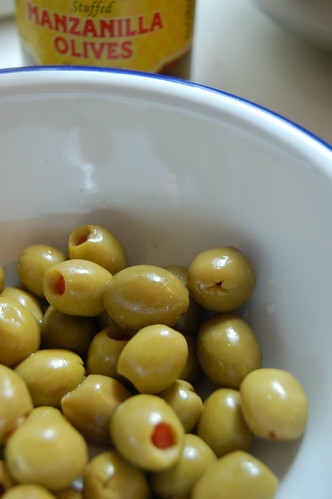
Start with some small green olives stuffed with pimento. These little Manzanilla olives are just the right size, no bigger than my thumbnail.

 
Grate up a flurry of cheddar cheese - I always double the original recipe because these things fly out of the bowl and 24 just isn't enough. I usually use Cabot extra sharp, and half a block is about enough (a block is 8 ounces) The tiny little shreds from a microplane make the dough cohesive; you don't want to use pre-shredded cheddar here or the big chunks will make the dough lumpy.


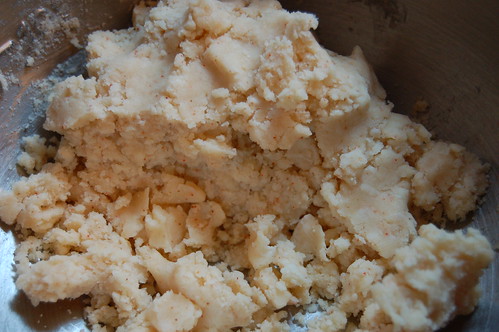
Smush that together with a cup of flour, half a stick of softened butter, and as much cayenne as you can handle. I use about half a teaspoon here - more than the original recipe, but not enough to overpower the brine with heat. I also add a splash of the olive juice from the jar to bring the dough together, but you might not need it. Also keep in mind that the olives will still be a little wet and that will help he dough hold.


Break off a small chunk of dough. It's easier to start with too much and tear the excess off.


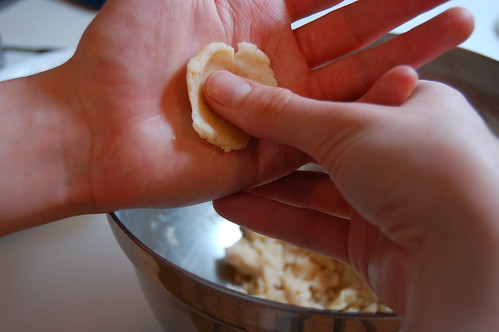
Squash it flat.


Make a little pocket with your thumb. The heat of your hands helps the dough go from crumbly to smooth.


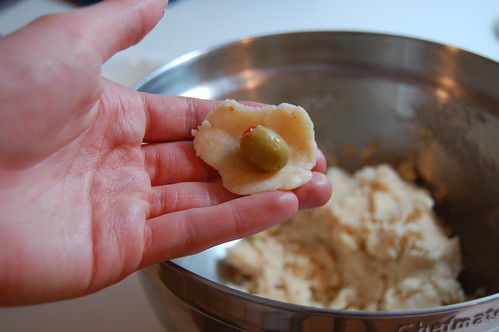
Pop an olive in there, and begin to close it up.


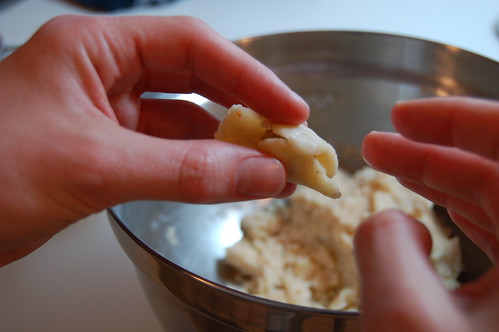
Fold two sides together, then pinch the ends closed.


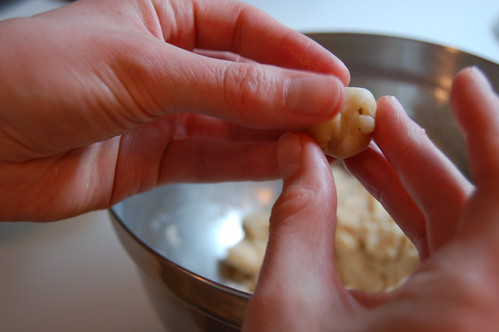
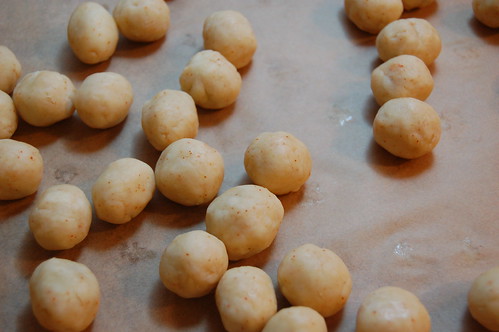
Pinch the holes closed or roll it gently to make it a smooth-ish ball.


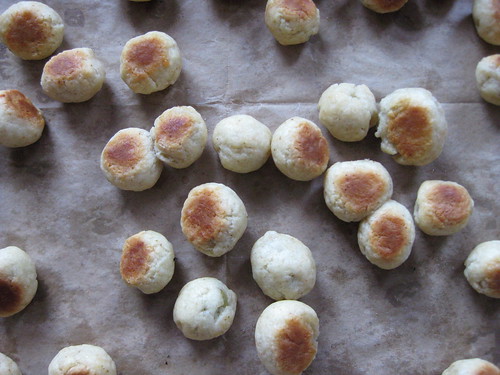
Lay the olives out on a baking sheet lined with parchment.


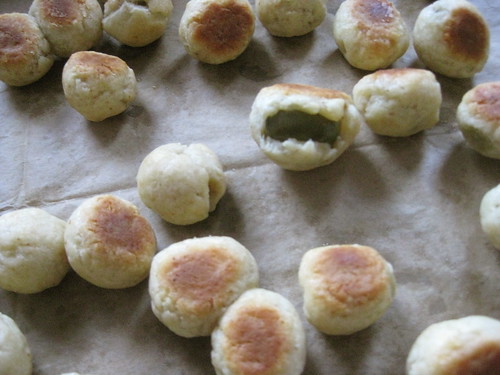
And bake! Don't worry if the dough splits away from some of them, they'll still be delicious and you can just eat those ones in the kitchen before anybody sees.


Baked Cheddar Olives
adapted from Gourmet, January 1991

48-60 small green pimento stuffed olives such as manzanilla, drained (from a 7 ounce jar, you will have extras)
4 ounces finely grated sharp cheddar cheese (a generous 2 cups)
2 ounces (four tablespoons) unsalted butter, softened
1 cup all purpose flour
1/2 teaspoon cayenne pepper

Preheat oven to 400F.

Combine butter and cheddar in a bowl, and add the flour and cayenne. Smush it together with a wooden spoon or your hands until it starts to come together as a crumbly dough. You may need to add a little of the olive juice to make it go from crumbs to dough, but do so sparingly, start with a couple of teaspoons and add it slowly.

Break off a small chunk of dough, press it in your palm into a sheet, and wrap it around an olive, rolling and pinching to surround the olive completely. Repeat with remaining olives, and lay them on a parchment lined baking sheet. These freeze beautifully at this point - stick the whole sheet in the freezer for an hour, then take the individual frozen olives and put them in a freezer bag. You can bake them all or just a few straight from the freezer, they just need an extra couple of minutes.

Bake olives for 15-20 minutes, or until the pastry is golden. If you think of it, turn them over once, but it's not completely necessary.

Makes 4-5 dozen olive poppers.

Thursday, October 8, 2009

Wild Mushroom Pasta

I'm sure by now you've all heard about the shocking shut-down of Gourmet Magazine by Conde' Nast on Monday. The New York Times broke the news Monday morning around 10
right when I was getting out of a meeting. I glanced at my google reader, and had to stifle a sob. Then I watched as Twitter reverberated with cries and sighs and "oh, no!"s, and my heart broke into little bits with each friend's discovery of and reaction to the news. So many in the food world-especially those of us here on the fringes-looked forward to each new issue for inspiration, reliable recipes and beautiful images.
(That's not to say everyone is upset about this. There are those who believe that print media is dead, and we should all move on, and whatever, Gourmet was elitist and irrelevant and too stuffy anyway. If you are one of those people, I'd like to point you to this fine obituary by Alex Van Buren of Salon, in which she points out that Gourmet was for the young and scrappy, too.)
In order to "get some positive energy flowing," Julie from A Mingling of Tastes has proposed that we cook a favorite recipe from Gourmet by next Thursday, October 15th. Since I have too many favorites from Gourmet (do you hear me, Conde Nast?), I decided to cook something new.
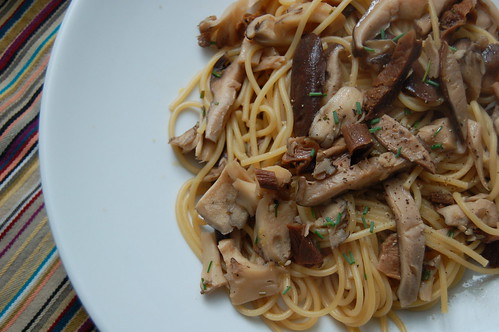
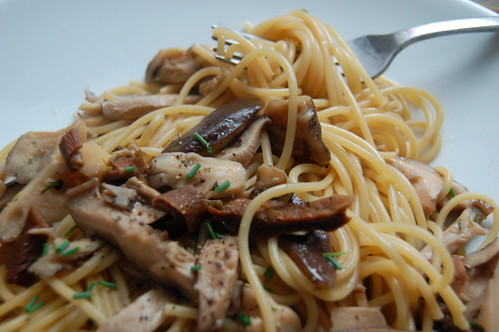
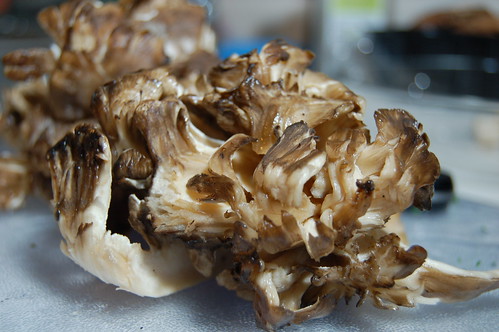
I also wanted to use the gorgeous hen-of-the-woods mushroom I picked up at the farmer's market on Tuesday, so last night we made this Wild Mushroom Pasta from the September 2006 issue. I thought that the recipe was spot on, as reliable as I have come to expect from Gourmet (are you LISTENING, Conde Nast?). I would never have thought to add lemon to mushrooms, but it elevates the woodsy flavors like you wouldn't believe.

Wild Mushroom Pasta
adapted from Gourmet, September 2006
You could certainly use a blend of wild mushrooms as the original recipe suggests, but I made a lot of adjustments from the based on the mushrooms I had available. I puchased a small container of fresh shitake mushrooms at the grocery store to supplement the hen-of-the-woods I got at the farmer's market, but crimini (baby bella) would be great if that's what you have. I would avoid regular old white button mushroms here, they just don't pack the necessary punch.
1/2 oz dried porcini mushrooms (could also use morel)
1 3/4 cups boiling-hot water
5 tablespoons unsalted butter
4 oz fresh shitake mushrooms, stems trimmed off, caps sliced 1/4 inch thick
1/2 lb fresh hen-of-the-woods (maitake) mushrooms, thoroughly and chopped into pieces roughly 1/4 inch thick
2 large garlic cloves, minced
3/4 teaspoon salt
1/4 teaspoon black pepper
1/2 lb spaghetti, fettucini, or other long pasta
1-3 tablespoons chopped fresh chives (use the larger amount if you like chives, I only had a tablespoon or so around and could still taste them)
1 1/2 teaspoons finely grated fresh lemon zest
1/2 teaspoon fresh lemon juice

Boil 1 3/4 cup of water in a small pot, and add dried mushrooms. Let sit until softened, at least 20 minutes. Drain the now-softened mushrooms through a sieve lined with a coffee filter or paper towel, reserving the filtered liquid. Rinse, dry, and finely chop the reconstituted mushrooms.
(Efficiency alert! Start a pot of water boiling for the pasta. If using fresh pasta, don't cook it until the mushrooms are done and you've taken them off the heat, because it only takes a minute, but if using dried, it will take about 10 minutes and you want to get it in there sometime while the fresh mushrooms are browning)
Heat 3 tablespoons butter in a large heavy skillet over moderately high heat until foam subsides, then sauté fresh mushrooms, garlic, salt, and pepper, stirring occasionally, until liquid mushrooms give off is evaporated and mushrooms are browned, 8-10 minutes. (Original recipe says 5-7 minutes but I found it took a bit longer for the mushroom liquid to evaporate.. Stir in chopped soaked mushrooms and reserved mushroom-soaking liquid and simmer 1 minute, then remove from heat. Doesn't it smell woodsy and wonderful in your kitchen right now?
Cook pasta in boiling salted water until al dente, timing will depend on the size and shape of your pasta. Using tongs or a large slotted spoon, remove pasta from water and add it to mushrooms in skillet. Add remaining 2 tablespoons butter and cook over moderately high heat, tossing and adding some pasta-cooking liquid if necessary to lightly coat, 1 minute. Add chives, lemon zest, and juice, then toss well. Serve immediately with cheese and pepper to taste.