Showing posts with label pasta. Show all posts

Thursday, December 6, 2012

Cavatelli with Sausage, Radicchio and Bread Crumbs

After outstanding staff meal of pasta this afternoon, I decided dinner should be MOAR PASTA ZOMG!

Solo dinner night, so I get to eat pork - hot italian sausage, specifically. But I also found myself with an abundance of creme fraiche, a head of fancy radicchio, and a craving for pasta, hence this dish.

Cavatelli with Sausage, Radicchio and Bread Crumbs
serves 2, or one hungry lady with leftovers for lunch

1/2 pound cavatelli or other curly type pasta
1 tablespoon olive oil
4-5 green onions, thinly sliced
1/2 pound hot italian sausage, casings removed (squeeze it toothpaste style!)
1 small head radicchio (treviso if you can find it), cut into 1/4-1/2 inch ribbons
1 cup creme fraiche
freshly ground black pepper

1/2 cup panko bread crumbs, toasted in a toaster oven until dark golden brown (careful not to burn them!)
freshly grated parmesan

Bring a large pot of salted water to a boil. When it's boiling, drop the pasta. Cook until a minute less than it says on the box or until just before al dente.

In a large skillet, heat the olive oil over medium high heat and add the green onions, saute 1-2 minutes. Add the sausage, and cook until brown, breaking up into small pieces. Move the sausage and onions to the outside edges of the pan and add the radicchio to the center. Cook until wilted, then stir. Add the creme fraiche, it will melt rapidly, just stir it in. Let the whole mess bubble until thickened, or until the pasta is almost cooked.

When the pasta is still firm, use a large slotted spoon or a spider to remove it from the water and add it to the skillet. Stir it all up, let it simmer until the pasta is cooked all the way (less than a minute). Remove to a plate, top with bread crumbs for crunch and parmesan for added deliciousness.

NB: you probably won't need to add salt, given the saltiness of the sausage, but taste it as you go and add salt if necessary.

Monday, September 17, 2012

Baked Ziti with Eggplant

Fall is baked ziti season. This one has eggplant, too!

I know I've fallen out of the swing of things around here, but how about I skip the apologies for my absence (the usual summer fun distracted me, and then I started a new job, woo!) and instead I offer you this baked ziti. Yesterday after our weekend house guests left for the airport and we put together some awesome new furniture, I found myself on the couch with WGBH on the TV. And Lidia was on. I've never actually watched Lidia before, but she was making baked ziti and it looked good. Like really really good. Like go buy a box of pasta and some cheese and get that in the oven. So tonight we had baked ziti. And when I took that mediocre picture up there and put it on facebook, somebody asked for the recipe (Hi, Maura!), so I figured that was as good a reason as any to get back here. Buon appetito!

Five Cheese Baked Ziti with Eggplant
inspired by Lidia Bastianich
Serves 6-8

1 pound ziti (or penne or some other tubular pasta)
3-4 tablespoons olive oil
1 large onion, diced
4-5 cloves garlic, minced
1 lb skinny eggplants, peeled and cut into 1/2 inch chunks
1 32 oz can crushed tomatoes (or a quart of home canned if you've got 'em)
1 cup whole milk ricotta
5 ounces sharp provolone cheese, diced small
3 ounces fresh mozzarella, diced small (I used a generous half of a standard mozzarella ball)
parmesan cheese and/or pecorino romano, grated, as needed (I had both so I used them, one or the other is fine)
fresh basil, torn, if you've got it - I used about two tablespoons
salt and pepper

Preheat your oven to 375F.

Bring a large pot of water to a boil and salt it generously.

While the water comes up to a boil, heat the olive oil in your largest skillet over medium heat and add the onion, cook until translucent (5-10 minutes depending on your heat level), then add the garlic. After about a minute, move the onion and garlic to the sides of the pan, then add the eggplant. It's going to look like a lot of food. Now's a good time to season it with salt and pepper. Cook, stirring occasionally, until the eggplant is soft. Add the tomatoes and stir, then bring to a simmer and cook until it's not watery anymore.

The sauce should thicken fairly quickly if you've got it in a nice wide skillet, so drop the pasta into the boiling water and cook for 2 minutes less than it says on the box (you'll be cooking it further in the oven so undercooking it a touch here keeps it from being soggy).

Just before the pasta is cooked, add the ricotta to the sauce and stir it in. When the pasta is done (it should be quite al dente), drain it and add it back to the empty pot. Add some sauce to the pasta and stir so it doesn't stick together. Put half a cup of the sauce in the baking dish and spread it out over the bottom. Reserve another half cup or so for the top layer, but go ahead and add the rest of the sauce to the pasta.

Spread half the pasta on the bottom of the baking dish, sprinkle half the cubed provolone and half the cubed mozzarella over it, then grate some pecorino and parmesan over it, then sprinkle with half your basil, if using.. Repeat with another layer of pasta, provolone and mozzarella and basil, spoon the rest of the sauce evenly over the top, then grate some parmesan and/or pecorino over the whole thing. Go ahead and be generous, here, you deserve it.

Put the baking dish in the oven and bake until lightly browned on top and bubbly, about 40 minutes, rotating halfway through. Let it sit for 5-10 minutes after it comes out of the oven so it can set up and you don't burn your mouth.

Wednesday, November 16, 2011

An Actual Use for Leftover Shellfish

Spaghetti with Mussels

I know, it sounds preposterous. But hang with me for a second! Don't throw away that last dozen mussels nobody could eat (and remember for next time that two people, especially if they are called Adrienne and Adam, really only need two pounds of mussels, not two and a half, because frankly, those two people will just fill up on bread sogged in delicious mussel broth and then use too many commas explaining it). You can stretch it into another meal, I promise.

So here is what you do: before you stash the leftovers in the fridge, take the remaining mussels out of their shells and plop them back in the broth. Discard the shells. If you served the mussels in a pot, leave the whole mess in the pot, as it will be easier to heat up later and save you 45 seconds of dishwashing time. Pop it in the fridge.

The next day, put the mussels and broth over low heat and warm them up slowly. Slowly! This way you can gently bring the mussels back up to edible temperature without rubberizing them. Meanwhile, cook half a pound of spaghetti. When the spaghetti is almost done, turn the heat on the mussels up to medium so it's just barely simmering. Drain the spaghetti just before it's done and finish cooking it in the mussel broth, this way it will absorb the deliciousness. Sprinkle with a bit of fresh parsley if you plan to take a picture for your blog, otherwise, just eat it.

Friday, November 4, 2011

Savoy Cabbage with Potatoes and Brown Butter

Savoy Cabbage and Potatoes

When I shopped for kimchi supplies, I bought two cabbages. The second one I bought, and the one I ended up using was a medium sized grocery store napa cabbage. But first I bought an ENORMOUS (as in 4 pound) savoy cabbage at a farmer's market. And then I had to figure out what to do with it.

As has become my routine when I have excess veg in the house, I turned to Deborah Madison. This Savoy Cabbage with Potatoes and Brown Butter had a note that it was good on its own or with buckwheat noodles, and I had some soba in the cabinet, so while the cabbage steamed, I cooked up the noodles.

Brown butter and sage are a classic flavor pairing, especially with potatoes (or winter squash, mmm), but the cabbage takes it in a different direction that is unexpected and delightfully crisp. If you've got some stage still holding its own in the garden, this is a nice way to use up a bit before the hard frosts take it for good.

Savoy Cabbage with Potatoes, Brown Butter and Buckwheat Noodles
serves 4

Certainly you could boil the potatoes and saute the cabbage if you didn't want to set up a steamer, but it went pretty quickly and then there's one less pan to clean! 

1 1/2 lbs savoy cabbage, core removed, cut into 1/2 inch strips
8 ounces small boiling potatoes
2 tablespoons chopped fresh sage
3 tablespoons brown butter*
3-4 tablespoons freshly grated Parmesan or more to taste.
salt and pepper
8 ounces soba or other buckwheat noodle (optional)

Scrub the potatoes and cut them into 1 inch chunks (or smaller if you like). Steam in a steamer basket over boiling water for 15 minutes or so, until the potatoes are tender. Remove them to a bowl and cover the bowl to keep them warm.

If you're using noodles, bring some water to a boil while the potatoes steam and cook according to package directions. Combine the sage and brown butter in a small bowl.

Steam the cabbage, tossing it every once in a while until it's tender, five minutes or more. Add to the bowl with the potatoes, then add the brown butter, sage, cheese, and plenty of salt and pepper. Toss with noodles, if using, then enjoy.

*To make more brown butter than you need, cut a stick or two (might as well make plenty while you're at it) of butter into large chunks and melt over medium-low heat in a saucepan. The butter will foam, and then the foam will subside and the milk solids will sink to the bottom and begin to brown. When the butter smells toasted and nutty, pour it immediately into another container; if you leave it in the sauce pan the residual heat will burn the butter. Stick the leftover butter in the fridge, you'll find a way to use it (like I said, winter squash, yum).


Monday, June 20, 2011

Gravlax and what to do with it

I know you've all been dying to know, so:  I pulled a card for fruit tarts with almond pastry cream, fruit coulis and a flavored creme anglaise for my final practicum. It didn't go quite as well as I had hoped (my crusts were on the tough side). It seems to have turned out ok, though, because I got a call on Friday from the academic supervisor to tell me I'm the Valedictorian for my class. Eek! Now I have to write a speech. Double Eeek!

Gravlax with traditional accompaniments

Anyway, graduation isn't until Saturday so by way of procrastinating writing a speech, I wanted to write here instead! Plus I wanted to tell you about my creative practicum! I called it "alternative charcuterie" because traditionally charcuterie means salamis and sausages and various porky products and I didn't use any pork. I made duck rillettes, mushroom pate and classic gravlax, plus mustard, cultured butter, dill pickled green beans, two kinds of crackers and a baguette.

gravlax on a bagel with avocado and red onions

Gravlax is a Scandinavian dish of raw salmon, cured in sugar, salt and dill. It's also unbelievably easy. Go get a pound and a half of salmon in two pieces, remove the skin and pin bones. In a separate bowl, mix together 1/2 a cup each of sugar and kosher salt and a teaspoon of white pepper. Spread a bunch of dill over one piece of the salmon, sprinkle the sugar/salt/pepper mixture over that, and if you have it, sprinkle a couple of tablespoons of gin over that. Top with the other piece of salmon, wrap the whole thing in plastic and put it in a dish in the fridge. Flip it every 12 hours or so, but otherwise just let it do its thing for two or three days. Ta-da! When you're ready to serve, scrape off the dill and slice it as thin as you can.

Pasta with gravlax, red onion, capers, dill

Now that you have a pound and a half of cured salmon, what do you do with it? Traditionally, you eat it on rye or pumpernickel bread with red onions and capers and maybe cream cheese. I made rye crackers to go with it for my practicum, and it was lovely. Here's the thing, though: I only used a few ounces of salmon and then I was left with more than a pound. We ate it with the remaining crackers the next day, and then for breakfast on bagels with avocado. Finally on Saturday night I used the end of it for this pasta dish.

Spaghetti with Gravlax and Dill
Serves 2, easily doubled


Use some restraint when seasoning the sauce here, the salmon is pretty salty and you don't want to overwhelm the dish. And a note on timing: start to finish this whole thing took me about 20 minutes, ten for the water to boil and ten for the spaghetti to cook. The sauce comes together while the pasta was cooking. So easy. Also you could probably use smoked salmon, but there would be, of course, a smokey element and gravlax is so easy you really ought to try making it!

1/2 lb spaghetti (I used whole wheat)
1 tbsp vegetable oil
1/4 cup red onion, diced small
1/3 cup chopped dill
1/2 cup heavy cream
1 tbsp capers
4 ounces gravlax, diced small
pepper and maybe salt

Bring a large pot of salted water to a boil.  Cook the spaghetti to al dente.

Meanwhile, in a medium skillet, heat the oil and saute the onion over medium heat until translucent. Don't let it brown, turn the heat down if you have to. Once the onion is soft, add the dill and stir, then add the cream and let it reduce until it's thickened a bit. Season with pepper. If the pasta isn't done yet, turn the heat off and let it hang out. It should be a little too thick, water from the pasta will loosen it back up.

About a minute before the pasta is done, turn the heat back on under the sauce, add the gravlax and capers. When the pasta is al dente, use tongs to transfer it directly from the water to the sauce, water clinging to the noodles will thin the sauce back out. Season with more pepper or possibly salt, if necessary, and serve.

Sunday, January 16, 2011

Tagliatelle with Brussels Sprouts, Walnuts and Gorgonzola

Pasta with brussels sprouts, walnuts and blue cheese

This is not the pasta I ate tonight. Today I practiced making tortellini for my upcoming midterm and made a big batch of marinara. But what if, say, you're watching your team fumble themselves out of the playoffs and you just don't have time for homemade pasta? Or you have a bunch of brussels sprouts and you're sick of roasting them? Then this is the pasta for you, my friends.

This is not a subtle dish to be sure. Brussels sprouts can be bitter if overcooked so make sure you don't cover the pan when they're cooking, and don't stir too often! You want to make sure they get some nice golden brown bits on them. Gorgonzola is a good strong blue, but I think cambozola (a triple cream blue) would be a nice choice here as well.

Tagliatelle with Brussels Sprouts, Walnuts and Gorgonzola
serves 2-4

1 1/2 lbs brussels sprouts, trimmed and roughly chopped
1 onion, thinly sliced
1/2 cup chopped walnuts (or more)
2 ounces (ish) gorgonzola or other blue cheese
tagliatelle or fettucine
olive oil
salt and pepper

Heat the olive oil over medium heat in large skillet. Saute the onion until translucent, then add the chopped brussels sprouts. Cook over medium heat until the sprouts are tender and starting to turn golden. Season with salt and pepper to taste (be generous, you're about to add a bunch of pasta).  Toast the walnuts in a dry skillet or a 350 degree oven (I use the toaster oven) for a few minutes until they smell extra nutty. Be careful not to leave toasting nuts unattended, they go from toasted to burnt in an instant.

Meanwhile bring a large pot of salted water to a boil for the pasta. Cook the pasta until al dente; note that if you're using fresh pasta this will only take a couple of minutes, otherwise the timing will depend on the type of dry pasta you choose. If you forget to start the pasta until the sprouts are ready, just turn down the heat on the sprouts and let them hang out over a super low flame for a while, it'll be ok.

When the pasta is al dente and the brussels sprouts are done to your liking, use tongs to transfer the pasta from the cooking water into the saute pan. A little water clinging to the noodles is a good thing, it'll keep everything moist. Add the toasted walnuts and toss the pasta and sprouts together long enough to heat the sprouts back up if they've been resting. Taste and adjust seasoning if necessary (mine needed more salt and pepper). Dish the pasta out into serving bowls and top with blue cheese and a little drizzle of olive oil.

Friday, September 10, 2010

Stone Soup Farm CSA Week Fourteen (and squash ravioli)

Stone Soup Farm CSA Week Fourteen

This week's share is sort of cracking me up: watermelon and tomatoes = summer. Squash and cabbage = winter. It pretty much defines the in-between-season we're in at the moment. Tuesday it was 90 degrees. Yesterday it was barely 70. Either way, we're still eating well. Here's what we've got this week: another watermelon (ick), two acorn squash, two pounds of green zebra tomatoes (mature tomatoes that happen to be green, not green tomatoes), a pound and a half of beets, half a pound of edamame, a napa cabbage, a bunch of basil, and half a pound of mixed salad greens. My food processor died last week, mid-pesto, so I'm not sure what to do with the basil now. I've been making small batches and sticking them in the freezer, but I'll have to come up with another way to preserve this bunch. Oh and hey, did you know that you can keep basil fresh by cutting the bottom of the stems and sticking it in a glass of water just like you would for cut flowers? It does start to wilt after a few days, but it's better than the fridge!

251/365: Roasted Acorn Squash

My Aunt Helen (hi Aunt Helen!) gave us the pasta roller attachment for the Kitchenaid as a bridal shower gift a few weeks ago, and we broke it in this week when we used the acorn squash as ravioli filling. I don't say this lightly, guys, but it is life changing. Adam loves fresh pasta, and it's not that hard to make the dough: for every 100 grams of flour, one egg. Add a bit of salt, knead until smooth, rest, roll, cook. The only problem was that with our hand-cranked (read: Adam-cranked) pasta machine, it took us 45 minutes to roll out enough pasta for two people. Rolling out the dough with the Kitchenaid took ten minutes. Ten! I foresee lots of fresh pasta this winter.

Acorn Squash Ravioli

No actual recipe today, because I wasn't completely happy with way the filling turned out. I mixed the roasted acorn squash with some salt and a few plops of ricotta cheese, then we served the ravioli with a sage brown butter. It was tasty, but not as good as it could have been. Acorn squash was good (and our CSA farmer advised that we use the acorn squash sooner than later, it won't keep as well as last week's buttercup), but butternut would have been better since it has a smoother texture when cooked.

Thursday, August 12, 2010

Stone Soup Farm CSA: Week Ten (and baked tomato sauce)

Stone Soup Farm CSA Week 10

I know. I know. Those tomatoes! They're distracting me, too. Well, they would if they were still around. Before I wax rhapsodic, let me run down the inventory this week: beets with their greens (which are really purple), two yellow zucchini, two small pattypan squashes, a bunch of basil, a pound of carrots, two gorgeous onions and a head of red leaf lettuce. On Tuesday (vegetable day! the best day of the week!) we had a salad with the lettuce and a couple of tomatoes (plus an astonishing array of things I found in the fridge).

Wednesday I used the two remaining tomatoes in a riff on this baked pasta sauce from The Wednesday Chef. I chopped up the tomatoes into large chunks, spread them with some olive oil in a baking dish, and sprinkled a generous handful of breadcrumbs on top. (I had to use store bought panko, my freezer stash of crumbs was burned beyond recognition). I forgot the cheese, which it turns out was an error on my part. After 20 minutes at 400, I stirred the smushy melty awesomeness into a sauce, added a handful of basil and a modest shower of parmesan cheese and tossed it with some campanelle pasta. Adam's comment? "Need's more parm." He was totally right. I remember thinking that I didn't want to salt them too aggressively before they went in the oven because they'd be concentrating in flavor a bit and I knew I would be adding parmesan with the pasta. I was afraid of over salting, and instead wasn't aggressive enough. Lesson learned: don't be bashful!

Baked Tomato Pasta Sauce

I did love the texture of this sauce, however. I know it's cucina povera, but using bread crumbs with tomatoes is inspired and to me it feels decadent to use purposely sogged bread. I could be a total weirdo, but hey, maybe you'll like it, too!

What interesting things have you done with tomatoes this summer? And aren't you glad they're back with such vigor after last year's blight?

Monday, May 3, 2010

Pasta with asparagus, bresaola and smoked gouda

Asparagus tips


Aaah, asparagus. Is there any more longed for harbinger of spring? I made pasta with asparagus last year, but I went slightly heavier this year - no pea shoots and lettuce, this time we're using smoked cheese and cured beef! Mmmm, charcuterie...


Cheeeeeeese


This is a riff on a recipe from Giada De Laurentiis that I used to make all. the. time. I even suggested it to an old house mate as a simple and delicious meal to impress a date. From what I remember, he was impressed. I, however was NOT impressed when she left the resulting dishes in the sink for three days, but that's a story for another time. Anyway, I couldn't find smoked mozzarella at the store, so I used smoked gouda. Mozzarella is meltier, but gouda worked fine. For the sake of pork avoidance, I used bresaola, a cured beef salumi instead of prosciutto. It's not the same; bresaola is distinctly beefy, but it filled the salty fatty meaty hole left by prosciutto.


Meat mosaic
I got the bresaola at Dave's Fresh Pasta right in Davis Square, which is also where I picked up this, uh, fresh pasta. This made an obscene amount of food, much more than we needed. When I bought the fresh pasta, the woman at the shop suggested 1 1/3 pounds for 4 people (I wanted dinner for two + leftovers), but we got 7 (admittedly not enormous) servings out of that much pasta. It was good enough for us to eat for a few days later, but it certainly was not as good reheated as freshly cooked. If you do use that much pasta, use two bunches of asparagus and a bit more cheese.

Pasta with asparagus, bresaola and smoked gouda

Pasta with Asparagus, Bresaola and Smoked Gouda
I originally found this recipe in one of Giada's cookbooks and she suggests you make it with penne or ziti to mimic the shape of the asparagus. I think it's very good with penne, but I liked it with fresh pasta quite a bit. She would also have you saute some minced garlic in olive oil and toss the whole mess in that pan, but I skipped garlic and drizzled olive oil on at the end. If you have fresh basil or parsley on hand (I didn't), a tablespoon or two of slivered herbs works very well, toss it with the pasta just before serving.

1/2-3/4 pound fresh pasta (I used a variety with black pepper in the dough)
1 bunch asparagus, woody ends removed, cut into 1 1/2 inch long pieces
scant 1/4 lb bresaola (or prosciutto) cut into strips
3 oz smoked gouda (or smoked mozzarella), cut in small (1/4 inch) cubes
olive oil
salt and pepper

Bring a large pot of salted water to boil. Add the fresh pasta, then 1 minute later add the asparagus pieces. When fresh pasta is cooked through (taste to check, it should only take another two or three minutes after you add the asparagus), and the asparagus is crisp-tender, reserve a cup of the cooking water, then drain pasta and asparagus.

Return to pot, add strips of bresaola and cubed cheese, toss with a couple of tablespoons of olive oil, salt and pepper to taste (I used 1/2 a teaspoon of salt and 8-9 grinds black pepper). Remember that the meat is quite salty, and if you've salted your pasta cooking water well you shouldn't need much salt at this point. Taste, add more salt or pepper if necessary or pasta cooking water if it seems dry, then serve.

Sunday, January 31, 2010

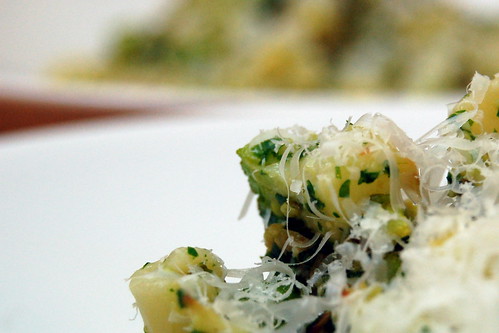
Pasta with Parsley Sauce and Cauliflower

We spent the first couple of weeks of January doing our best to be real vegetarians. We don't eat that much meat anyway and we were... ok at it. I think we'll do it again this summer when we have greens coming out our ears from our CSA in June or in September when all I want to eat is tomato sandwiches, but in January it's a bit of a challenge (so kudos to Andrew and Cara who made it the entire month!) Particularly when everyone around you is eating hot dogs and you LOVE hot dogs but you eat a veggie burger instead. Le sigh.

There are lots of people who will happily get into the politics and morals of why you should or shouldn't eat meat, and for us it wasn't 100% an ethical thing, though our reasons were many: quality, ethically raised meat is expensive. It's not great for the planet. It's easy to eat too many calories if you're eating meat. In general, vegetables are lower in fat and higher in fiber. We are back to eating meat a couple of times a week, but we haven't set up strict guidelines. If you're not already, have you ever "gone veg" for a week or a month at a time? How'd you do? What surprised you?

I cooked out of Vegetarian Cooking for Everyone a lot (those curried parsnips were a standout, as well as a mushroom pot pie that I really need to tell you about) and then we bought this weird green cauliflower. It must have been a hybrid brocco-flower type thing, because the florets weren't quite as compact as white cauliflower. I ignored the weirdness and adapted a pasta recipe from Gourmet,  just in time for February's Gourmet Unbound. In the original, you are supposed to steam the florets but it was cold in my kitchen and I wanted to turn on the oven and roasted vegetable is almost always tastier than steamed vegetable... so I roasted it. I took a look at the parsley sauce and said, oh, that's basically a pesto without nuts and garlic. Since I had pine nuts and garlic, I incorporated those. And because raw garlic is often too sharp for my taste and I already had the oven on, I roasted a few cloves with the cauliflower before whizzing them into the sauce. Top the plate with a little snowstorm of parmesan cheese, or skip it if you're vegan.


Pasta with Parsley Sauce and Cauliflower
adapted from Gourmet, February 1993
serves 4

2 1/2 cups packed fresh parsley leaves
small handful pine nuts, toasted (about 1/3 cup)
2/3 cup olive oil
3-4 large cloves garlic, unpealed
1 large head of cauliflower (about 2 1/2 pounds), cut into 1-inch flowerets and the stems sliced thin
3/4 pound campanelle or rotelle pasta (something with a ruffly edge, please)
1 cup pimiento-stuffed olives, chopped fine
salt and pepper
Parmesan cheese 

Heat the oven to 375 while you chop the cauliflower into florets. Toss florets and unpeeled garlic cloves with a couple of tablespoons of olive oil, a teaspoon or so of salt, and a bit of pepper. Spread on a sheet pan (one with sides) and roast, stirring once or twice for 20-25 minutes until cauliflower is tender with some brown spots.

While the cauliflower roasts, wash the parsley and separate the leaves from the stems. (You can stick the stems in a freezer bag and freeze them for making stock later, if you're into that sort of thing.) Toast the pine nuts in a dry skillet over medium heat, tossing frequently and taking them off the heat and out of the pan just when you start to smell them. Do not turn your back on pine nuts, because they go from toasty to charred in a matter of seconds and charred is burnt and burnt is bad. Grab the garlic cloves (use tongs) from the roasting pan in the oven after about 20 minutes, leave the cauliflower in for 5 more minutes if it's not done. Remove the skins, the cloves should be soft and squishy, if not entirely spreadable.

Meanwhile, bring a large pot of salted water to a boil for the pasta. Start the pasta going when the cauliflower has about 10 minutes left, and cook just to al dente, then drain. Save a cup or so of the pasta-cooking water in case you need it to thin out the pesto.

For the parsley pesto, in a blender or food processor (or the tiny attachment to the stick blender, which is my new favorite kitchen toy), puree the parsley leaves, roasted garlic cloves, toasted pine nuts, 1/2 teaspoon of salt, 1/4 teaspoon pepper and 1/2 cup of olive oil. Stop and scrape the sides, and if necessary add another glug of olive oil. Process again, until you  have a pesto-like sauce.

To serve, toss pasta with parsley pesto, cauliflower and olives, top with parmesan cheese.

Wednesday, November 25, 2009

Ack! It's Thanksgiving!

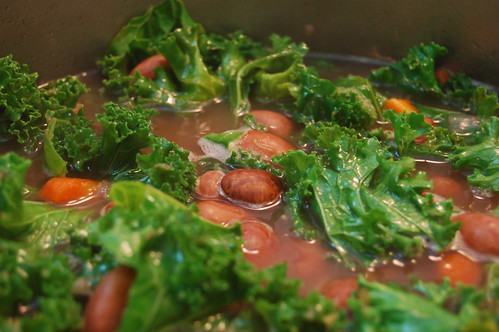
 Oh, hi there. I haven't forgotten you exist, blog friends. Really. AND I've been cooking! Look, soup!


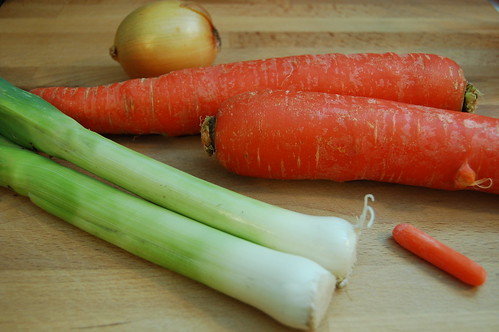
And monster-enormo-giant carrots! (baby carrot and onion for scale)


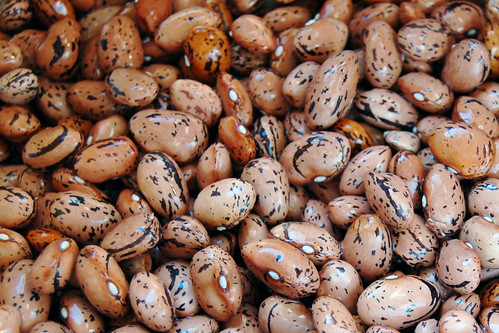
And beautiful Borlotti beans!


In addition to actual cooking, I've been doing a TON of baking. My contribution to the Thanksgiving table consists of dill bread (my family would revolt if I show up without this for any holiday), parker house rolls, multigrain bread, compound butter, jam from my canning extravaganza (well, ok, that won't be ON the Thanksgiving table), and the turkey. Yep. My employer gives us a turkey from Bob's Turkey Farm every year on the Wednesday before The Big Day... and he's in a cooler in the hallway now, waiting for the trip up to Maine, which we'll be taking in a couple of hours. I'll be back on Sunday with Sweet Potato Latkes for Gourmet Unbound. Until then, I'll leave you with this awesome soup I learned about from The Wednesday Chef.


Cranberry Bean, Lacinato Kale and Pasta Soup
Makes 8 to 10 servings, seriously. This is a lot of soup. I sometimes halve the recipe. I soaked my beans for the eight hours I was at work, plus Rancho Gordo beans are super fresh, so my cooking time for the beans was a little shorter than what's noted here.

1/4 cup olive oil plus 2 1/2 tablespoons, divided
2 leeks, white part only, cleaned and sliced, about 2 cups
2 medium carrots, finely chopped, about 1 cup
1 onion, finely chopped, about 1 cup
3 cups dried cranberry beans (I used Rancho Gordo Borlotti beans)
Kosher salt
2 bunches lacinato kale (or one and a half bunches curly kale), cleaned, stemmed and coarsely chopped, about 10 cups
3 cups dried orecchiette pasta (about 9 ounces)
1 tablespoon fresh minced sage
1/2 cup fresh chopped parsley
1 1/2 tablespoons smoked paprika
1 1/2 teaspoons Hungarian paprika
1/8 teaspoon fresh lemon juice
Grated Parmesan cheese, for garnish

1. In a 4-quart soup pot or cast iron casserole, heat 1/4 cup of olive oil and cook the leeks, carrots and onions over medium-low heat until just softened, 8 to 10 minutes.

2. Add the dried beans and 12 cups of water. Bring to a simmer over high heat, then reduce the heat to low and cover the pot with the lid, stirring occasionally. After about 45 minutes, add 1 tablespoon of kosher salt. Continue to cook, covered, and again stirring occasionally, just until the beans are soft, 45 minutes to 1 hour or more (my beans only needed another half hour or so).

3. With a slotted spoon, remove 1 cup of the beans and, separately, 2 tablespoons of bean liquor and set both aside. Add the kale to the soup, stirring in a few cups at a time as the greens wilt. Cover, and continue to cook for 8 to 10 minutes more until the greens are tender, then remove from the heat.

4. Meanwhile, bring a pot of salted water to a rolling boil and cook the pasta until al dente; drain and reserve.

5. Combine in a food processor or blender: reserved beans and bean liquor, sage, parsley, paprikas and lemon juice, 2 1/2 tablespoons olive oil and a pinch of salt. Blend until smooth. Give it a taste, it may need salt or more liquid from the soup for ease of blending.

6. Right before you're ready to serve it, stir the cooked pasta into the soup. Ladle the soup into bowls and top each with 2 tablespoons of spiced bean purée (feel free to be generous, this stuff really makes the soup). Grate Parmesan over the top of each bowl to taste and serve immediately.

Thursday, October 8, 2009

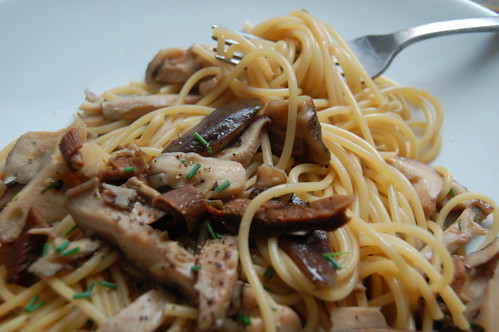
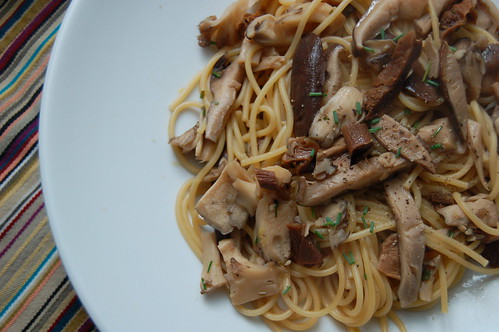
Wild Mushroom Pasta

I'm sure by now you've all heard about the shocking shut-down of Gourmet Magazine by Conde' Nast on Monday. The New York Times broke the news Monday morning around 10
right when I was getting out of a meeting. I glanced at my google reader, and had to stifle a sob. Then I watched as Twitter reverberated with cries and sighs and "oh, no!"s, and my heart broke into little bits with each friend's discovery of and reaction to the news. So many in the food world-especially those of us here on the fringes-looked forward to each new issue for inspiration, reliable recipes and beautiful images.
(That's not to say everyone is upset about this. There are those who believe that print media is dead, and we should all move on, and whatever, Gourmet was elitist and irrelevant and too stuffy anyway. If you are one of those people, I'd like to point you to this fine obituary by Alex Van Buren of Salon, in which she points out that Gourmet was for the young and scrappy, too.)
In order to "get some positive energy flowing," Julie from A Mingling of Tastes has proposed that we cook a favorite recipe from Gourmet by next Thursday, October 15th. Since I have too many favorites from Gourmet (do you hear me, Conde Nast?), I decided to cook something new.
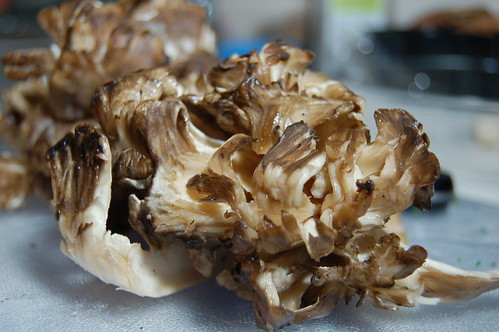
I also wanted to use the gorgeous hen-of-the-woods mushroom I picked up at the farmer's market on Tuesday, so last night we made this Wild Mushroom Pasta from the September 2006 issue. I thought that the recipe was spot on, as reliable as I have come to expect from Gourmet (are you LISTENING, Conde Nast?). I would never have thought to add lemon to mushrooms, but it elevates the woodsy flavors like you wouldn't believe.

Wild Mushroom Pasta
adapted from Gourmet, September 2006
You could certainly use a blend of wild mushrooms as the original recipe suggests, but I made a lot of adjustments from the based on the mushrooms I had available. I puchased a small container of fresh shitake mushrooms at the grocery store to supplement the hen-of-the-woods I got at the farmer's market, but crimini (baby bella) would be great if that's what you have. I would avoid regular old white button mushroms here, they just don't pack the necessary punch.
1/2 oz dried porcini mushrooms (could also use morel)
1 3/4 cups boiling-hot water
5 tablespoons unsalted butter
4 oz fresh shitake mushrooms, stems trimmed off, caps sliced 1/4 inch thick
1/2 lb fresh hen-of-the-woods (maitake) mushrooms, thoroughly and chopped into pieces roughly 1/4 inch thick
2 large garlic cloves, minced
3/4 teaspoon salt
1/4 teaspoon black pepper
1/2 lb spaghetti, fettucini, or other long pasta
1-3 tablespoons chopped fresh chives (use the larger amount if you like chives, I only had a tablespoon or so around and could still taste them)
1 1/2 teaspoons finely grated fresh lemon zest
1/2 teaspoon fresh lemon juice

Boil 1 3/4 cup of water in a small pot, and add dried mushrooms. Let sit until softened, at least 20 minutes. Drain the now-softened mushrooms through a sieve lined with a coffee filter or paper towel, reserving the filtered liquid. Rinse, dry, and finely chop the reconstituted mushrooms.
(Efficiency alert! Start a pot of water boiling for the pasta. If using fresh pasta, don't cook it until the mushrooms are done and you've taken them off the heat, because it only takes a minute, but if using dried, it will take about 10 minutes and you want to get it in there sometime while the fresh mushrooms are browning)
Heat 3 tablespoons butter in a large heavy skillet over moderately high heat until foam subsides, then sauté fresh mushrooms, garlic, salt, and pepper, stirring occasionally, until liquid mushrooms give off is evaporated and mushrooms are browned, 8-10 minutes. (Original recipe says 5-7 minutes but I found it took a bit longer for the mushroom liquid to evaporate.. Stir in chopped soaked mushrooms and reserved mushroom-soaking liquid and simmer 1 minute, then remove from heat. Doesn't it smell woodsy and wonderful in your kitchen right now?
Cook pasta in boiling salted water until al dente, timing will depend on the size and shape of your pasta. Using tongs or a large slotted spoon, remove pasta from water and add it to mushrooms in skillet. Add remaining 2 tablespoons butter and cook over moderately high heat, tossing and adding some pasta-cooking liquid if necessary to lightly coat, 1 minute. Add chives, lemon zest, and juice, then toss well. Serve immediately with cheese and pepper to taste.

Tuesday, September 22, 2009

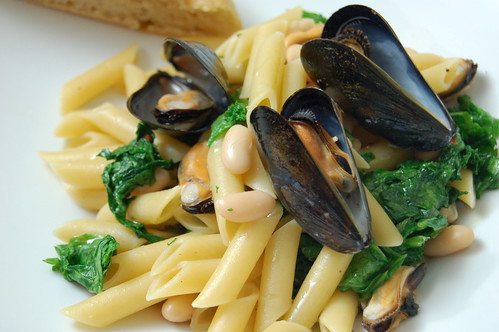
Mussels, pasta, beans and greens: a bivalve revelation.

I wish I could say I've never been a picky eater, but if we're being honest I should confess: when I was a kid my salads were more Hidden Valley Ranch and from-a-box croutons than vegetables. I didn't like raw tomatoes until at least the tail end of high school. Ham? No thank you. Spicy food? Mmm, I'll pass. I grew up in Maine, but it was years before I would even consider a lobster. And nothing - I mean nothing - could get me to eat a mollusk. Clams, oysters, the whole phylum was just skeeved me out. (BTW, Mom, sorry if that was annoying for you. I'll make it up to you in preserves and pickles this year, ok?)

While I still don't like ham (or watermelon, ew), I've recently come around to the allure of shellfish. I've eaten an oyster or two. I've sampled a clam. And then last winter I went out to dinner with my parents to one of Portland's best restaurants, five fifty-five, and I tasted the mussels my mom had ordered. It really was like a light bulb went off! They were smokey and briny and when you dipped the bread in the broth it just melted into a little seafood implosion on your tongue. I was SOLD.


But for the last year, mussels were a food I only ordered in restaurants, not something I cooked at home. The scrubbing, and the how would I know if they were dead, and the what if I gave us food poisoning with dead mussels!, it was just too much. But then I saw Mark Bittman's minimalist column in the New York Times a couple of weeks ago, and I could put it off no longer. Mussels, beans, AND pasta? These are a few of my faaaavorite thiiiings... plus the bitter mustard greens that were wilting in the fridge from what turned out to be our last CSA pickup of the year (that rant coming later, I assure you). And mussels are only $2.49 a pound! My friends, this is a keeper.

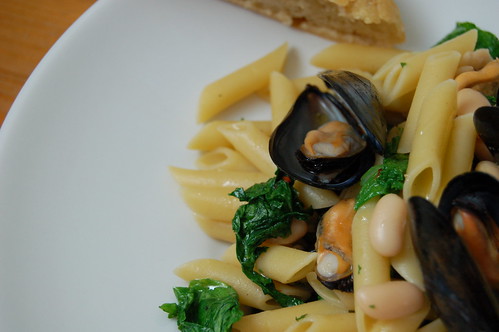
Pasta with Mussels, Beans and Greens
adapted from Mark Bittman

If you don't like bitter greens, by all means leave them out and use the parsley called for in the original recipe. If you like greens but don't like bitter, use swiss chard or kale or something more mild than the totally insane-in-a-good-way mustard greens. While you're cleaning the mussels, discard those with cracked shells, or those that don't close when you tap them a couple of times. Once they're cooked, discard mussels that HAVEN'T opened.

2 lbs mussels, scrubbed well
1 large bunch bitter greens such as mustard, washed and chopped
1 15 oz can white beans such as cannelini
1/2 lb penne, rigatoni, or ziti
1/4 - 1/2 tsp red pepper flakes
2 cloves garlic, minced
2 Tbsp olive oil
white wine
salt
pepper

Bring a pot of salted water to a boil.

Put the clean mussels in a large pot, cover with a tight fitting lid, and turn the heat to medium-high. You can add a splash of water if you like, but the mussels will let out enough liquid to steam themselves. When you hear the liquid bubbling, turn the heat to medium low and give the pot a shake every 10 seconds or so. When the mussels open up, they're done, probably 3-5 minutes. Shell most of them but leave a few in the shell for presentation if you like. Strain the liquid left in the pot (or just pour it out slowly leaving the gunk at the bottom).

Meanwhile, cook the pasta in the salted water, but take it out while it's still firm, it'll cook more in the pan with everything else. (Come to think of it you could even cook it ahead of time and use the same pot for the mussels.)

Heat a large skillet over medium high heat, add the 2 tablespoons of oil. Add the garlic and red pepper flakes and heat 30 seconds or until fragrant. Add the chopped greens. They should wilt quickly, but they'll go faster if you cover the pot for a minute or two. When there's room in the skillet, add the pasta, white beans, mussels, mussel cooking liquid and a splash of white wine (2 Tbsp or so). Stir to combine, and season with salt and pepper. When everything is warmed through, it's ready to serve, with some good bread for sopping and a glass of that white wine.

Tuesday, July 21, 2009

A Flavor Best Described as Green

One of my favorite things about joining a CSA this year has been the abundance of produce that's new to me. Not that I've never heard of fava beans, but I hadn't ever worked with them before, and all I really knew is that they needed to be shelled twice. So when I got a pound of fresh fava beans in my CSA share a couple of weeks ago, I turned to twitter and asked how other people eat them. Kate mentioned they pair well with pecorino, and Adam had been asking about when we could make fresh pasta again, so one thing led to another, and this is what we ended up with.

Fresh pasta, lightly sauteed spring onions, barely-blanched favas, a very generous dose of black pepper and a flurry of pecorino romano. The flavor of a fava is best described, I think, as green. The grassy flavor is offset by the bite of pepper, so don't skimp, and the pecorino's nuttiness rounds the whole thing out. If you can track down some fresh favas, give this a try!
Pasta with Fava Beans, Spring Onion, and Pecorino
I encourage you to try making your own pasta (I learned it via the Real Epicurean), but if you're not DIY inclined, try this with one of the whole wheat pasta varieties available, the nutty flavor would make a nice duet with the pecorino, I think.
fresh pasta, enough for two people (200 g flour + 2 eggs), or dried pasta
1 lb fava beans
1 spring sugar onion (or 1 small red onion), sliced
olive oil
salt
freshly ground black pepper
pecorino romano cheese
Start a large pot of water boiling, and salt it well. You will use this to blanch the favas and cook the pasta.
Begin by removing the fava beans from the pods - you may have to snap the pods in half to get around the starchy bits and into the beans themselves. Blanch the beans in boiling water for just a couple of minutes, then remove using a spider or slotted spoon and plunge them into an ice water bath to stop the cooking. Drain after a couple of minutes, pop off the skins (this is the shelling twice part!) and set aside. Keep the pot of water boiling.
In a large sauce pan, sautee the onions in a couple of tablespoons of olive oil over medium-low heat until softened and translucent. This should only take about five minutes, and if they start to brown, turn down the heat but don't worry about it!
Meanwhile, cook the pasta - if you're using fresh pasta, it will only need 2 minutes or so, if dried, follow the recommended time on the box. Once the pasta is cooked, use tongs to transfer it from the water into the pan with the onions. Whatever water is clinging to the pasta will just loosen up the dish a little bit.
Add a the drained favas and give it a stir, then let it all heat through. Season with salt and a lot of black pepper, and if it looks dry add another tablespoon of olive oil. Plate into two pasta bowls, then top with a generous snowfall of pecorino.

Friday, May 22, 2009

Spring Pasta, and a Small Request

Well, friends, it's here! Memorial Day weekend! The start of SUMMER! Here in Boston it's supposed to be gorgeous: mid seventies, sunny, maybe a few showers on Sunday morning, but really a lovely long weekend. I am especially excited to have Monday off because it means the workweek will only be two and a half days long for me next week! That's right, friends, v-a-c-a-t-i-o-n starts on Thursday. Adam and I are taking off to the Pacific Northwest.

So while you look at pictures of the "living lettuce" and asparagus and the tasty pasta they went into, can I ask you a small favor? Can you help a girl out with travel planning? We'll be spending four days in Portland, OR and five in Seattle, WA, and I want to know: what should we not miss? According to Jeanette I have to try the Hedge House Pub's signature salad in Portland, and my mom says I should check out the library in Seattle. I want to drink the local IPAs, and order the pickle plate at Boat Street Cafe. Other plans include drinking boatloads of coffee, and Adam (excellent activities coordinator that he is) snagged us tickets to see Anthony Bourdain's lecture/talk/book promotion event at the Keller Auditorium. Please (please?) leave your suggestions in the comments. I would really love to hear them.

And while we're on the topic of suggestions, might I suggest you give this spring-on-a-plate pasta dish a try? Really, I mean, asparagus, pea shoots, LETTUCE? It's crunchy and delicious and good warm or cold. You could even take it with you to a barbecue this weekend!


Spring Pasta
Adapted from Bon Appetit

Ingredients
2 tablespoons butter
2 tablespoons extra-virgin olive oil plus additional for drizzling
handful of spring onions or green onions (dark green parts discarded); white parts cut into 1/4-inch-thick slices, pale green parts cut into 1/2-inch-thick slices
1 small minced shallot
Coarse kosher salt
1/2 cup dry white wine
1/2 cup low-salt chicken broth
1 pound asparagus, cut crosswise into 3/4-inch pieces
a couple of handfuls of pea shoots, (or 2 cups fresh peas, cooked briefly with the asparagus)3/4 pound campanelle (trumpet-shaped pasta) or medium (about 1-inch) shell-shaped pasta
most of a head of butter lettuce or Boston lettuce, cored, leaves cut into 3/4-inch-wide slices
1/2 cup finely grated Parmesan cheese plus additional for sprinkling
1/4 cup chopped fresh Italian parsley
4 oz thinly sliced prosciutto, cut crosswise into 1/2-inch-wide strips

Bring a large pot of water to a boil, you'll need it in a minute.

Melt butter with 2 tablespoons oil in heavy large skillet over medium heat. Add onions and shallot. Sprinkle with coarse salt and pepper. Sauté until tender (but not brown), about 8 minutes. Add wine; increase heat to medium-high and simmer until liquid is reduced to glaze, about 3 minutes. Add broth and bring to simmer; set aside.

Cook asparagus in large pot of boiling salted water until just tender, 2 to 4 minutes, depending on thickness of asparagus, I usually put the stalks in first and the quicker-cooking tips a minute or two later. Using skimmer or slotted spoon, transfer the asparagus to large bowl of ice water and return the water to a boil.

Cook pasta until tender but still firm to bite, stirring occasionally. Drain, reserving 1 cup pasta cooking liquid. Meanwhile, reheat onion mixture. Add lettuce and stir just until wilted, about 1 minute. Add drained asparagus and peas; stir until heated through. Add pasta, Parmesan cheese, and parsley to skillet with vegetables; toss, adding reserved pasta cooking liquid by 1/4 cupfuls if dry. Season with salt and pepper.

Transfer pasta to large shallow bowl. Sprinkle prosciutto over; drizzle with olive oil, sprinkle with additional Parmesan cheese.

Monday, March 30, 2009

Alla Crazy Bastard

You guys have made this tough! When I started this post, I had seven votes for pasta and seven votes for cookies. (Oh, and have you taken my reader survey yet? It's up until Wednesday, so please, Click Here! and tell me your deepest secrets.) Then, last night, one more vote came in, swinging it in favor of pasta.

I gotta say, I was rooting for pasta. I don't have much of a sweet tooth, and if it didn't sound so... well, gross, I'd say I have a green tooth. That is, I can't seem to get enough of them. Plus, look how pretty rainbow chard is! All those beautiful colors from one plant.

And then you toss in some cherry tomatoes and let them get all soft and squishy in a good way. Something about warming up mid-winter cherry tomatoes really does make them taste more tomato-ey.
This recipe comes from Food and Wine, which is one magazine I don't subscribe to. I bought the January issue back at Christmas when I was spending a lot of time in airports. It's by Andy Nusser and apparently it comes from a New Yorker cartoon where the punchline is "fusilli, you crazy bastard!" except... I used gemelli. You can use whatever twisty short pasta you like.

Pasta alla Crazy Bastard
adapted from Food and Wine

serves 2

1/4 cup walnut halves, toasted and chopped
1 pint cherry tomatoes
2 tablespoons plus 1 teaspoon olive oil
Salt and freshly ground black pepper
1/2 pound fusilli pasta (I used gemelli)
3 garlic cloves, sliced
1 bunch swiss chard, rinsed and coarsely chopped, large stem pieces separated
Pinch of crushed red pepper
4 oz log soft goat cheese, sliced or crumbled
freshly grated Parmigiano-Reggiano cheese

Preheat the oven to 450°. On a rimmed baking sheet, toss the cherry tomatoes with 1 teaspoon of the olive oil and 1/2 teaspoon each of salt and pepper. Roast the tomatoes for about 10 minutes, until browned in spots.

In a large pot of boiling, salted water, cook the pasta. Meanwhile, heat the remaining 2 tablespoons of olive oil in a large skillet over medium low heat. Add the garlic and cook over moderate heat, stirring constantly, until golden, 2 minutes. Add the chard stems to the pan and cover for about a minute, as they will take longer to soften than the leaves. Add the roasted tomatoes, chard leaves and crushed red pepper and cook, crushing the tomatoes slightly, until the greens are just wilted, about 5 minutes. You may want to cover the pan to help things along.

Drain the pasta, reserving 1/2 cup of the cooking water. Add the pasta, the reserved cooking water and the sliced goat cheese to the skillet and cook over moderate heat, tossing to coat the pasta. Season with salt and pepper. Transfer the pasta to a bowl, garnish with the chopped toasted walnuts, top with the Parmigiano-Reggiano and serve immediately.

Monday, February 23, 2009

What do YOU do with marjoram?

Last week I bought some marjoram, and I have no idea why. Does this ever happen to you? I make a mental list of what recipes I want to try that week and then I take my mental list to the store and by the time I've gotten home I forget at least one of the things I was going to make. Something with chicken? I still don't know. When I did a little food blog search for marjoram I came across tidbit on SeriousEast called Marjoram: What is the Deal? My question is: what is the deal with this totally emo photo of marjoram? How did that happen?

Anyway, it was some interesting reading, but not many recipes mentioned. I wandered over to epicurious.com instead and came across this little gem, Castellane Pasta with Sausage, Peppers, Cherry Tomatoes, and Marjoram. Oh man. There's certainly no way to make it look pretty (so I sort of quit trying... sorry, I was hungry!) but it tastes great. Kind of like the old standby of sausage and peppers, but punched up with tomatoes and marjoram and mellowed out with tangy goat cheese. If you grow marjoram or have some around, give it a try. Oh, and if you have a kick ass marjoram recipe, could you leave it in the comments, please? I still have tons of the stuff and I'd hate to let it go to waste now that I know I like it!


I made some substitutions, of course, based on what I had around the kitchen: sweet sausage vs. hot, whole wheat pasta vs. regular, adding a jalapeno because I only had sweet sausage. The link above will take you to the original, this is the way I made it.

Pasta with Sausage, Peppers & Marjoram
adapted from Bon Appetit

serves two

1 Tbsp olive oil
1/2 lb sweet italian sausages, casings removed (three links)
1 green bell pepper, chopped
1 jalapeno pepper, semi-seeded and minced (I like a little heat, remove all seeds and ribs if you don't)
1/2 medium onion or 1 large shallot, chopped
2 teaspoons chopped fresh marjoram
1 pint cherry tomatoes
salt and pepper
1 handful whole wheat spaghetti
3 ounces goat cheese

Start a large pot of salted water to boil.

Heat a large non-stick skillet over medium heat. Add the olive oil, then saute the sausage (casings removed, remember), breaking it up into bits, until browned, about 5 minutes. Add both peppers and the onion, then saute 10-12 minutes or until the peppers are soft and the onions are golden. Stir in the marjoram and tomatoes, and saute 5-10 minutes until the tomatoes get squishy, then crush them with your spoon.

Meanwhile, cook the spaghetti in the boiling water until al dente. Drain, reserving a little cooking water.

If the skillet is large enough, add the spaghetti to the skillet. If not, return the cooked spaghetti and sausage/pepper mixture to the pot. Add the crumbled goat cheese and stir to blend, thinning with cooking water if necessary. Transfer pasta to plates and enjoy.
Friday, January 30, 2009

Pasta with Golden Beets and Their Greens

Did you know I majored in Italian Studies in college? I speak the language and I studied at l'Universita di Ferrara for a semester my junior year. When I graduated, I took a job as a travel agent with an Italian Tour company in Boston. Whether I liked that job (I didn't) and whether I still work there (I don't) is not relevant to this post; the point is that the Italian-born owner of the company was an excellent cook. If I came in with leftover Spaghetti Bolognese for lunch, she would tell me how her mother made Bolognese. Every once in a while she would bring in homemade pizza that was really delicious. She also subscribed to Gourmet magazine. It was just my luck that she subscribed both in her name and in the name of the company, and I usually snagged the extra copy floating around the office. That first year out of school was the first year I really had to cook for myself and the magazine was an inspiration. I still make the first thing I ever cooked from Gourmet - Seared Tofu & Vegetables with Coconut Sauce from the September 05 issue. When I quit that job I lost my access to free issues and I only picked it up at the grocery store every once in a while.

Until this year, when I bought myself a Christmas present: I finally (finally!) subscribed to Gourmet. AND there was a *special offer* on the interwebs, so I subscribed to Bon Appetit, too! So now you know the long and winding road that takes us to today's recipe, Pasta with Golden Beets and their Greens, from the February 2009 issue of Bon Appetit. I've messed with the name a bit because I've messed with the recipe a bit. I'm not a fan of farfalle for purely aesthetic reasons (I think they look sort of juvenile on the plate) so I used gemelli instead. I also cut the recipe in half because I only bought one bunch of beets and it was just me for dinner.

Aren't these beautiful greens? I have purchased beets at the grocery store and had greens so sad and lifeless that I tossed them rather than trying to salvage them, but these guys are just so perky and tasty-looking, exactly what the recipe called for. You could use red beets if you want, but your pasta will definitely turn pink.

Oh, and this isn't the speediest of recipes. It was fine with me, because like I said it was just me and I was watching old episodes of No Reservations and was perfectly content, but if you don't have 40 minutes to caramelize onions, maybe save this for another day, hm? Elise has posted a time-lapse video of caramelizing onions which is really amusing, but here are mine at 0 minutes:

10 minutes:
20 minutes:
30 minutes:
and finally, 40 minutes and ready to go in the finished dish.


Speaking of the finished dish (and please forgive the weird Space Odyssey perspective in this photo, I got impatient to eat and this is the best one I got), doesn't this look yummy? The sweetness of the onions sets off the earthiness of the beets really well and the pine nuts are a welcome crunch. And I got to feel like I was really behaving, since I ate the WHOLE vegetable AND there were leafy greens. I hope you like it, too.


Pasta with Golden Beets and Their Greens
2 generous servings

small handful of pine nuts
4 Tbsp olive oil
1 very large onion (or two smaller onions), sliced
2 cloves garlic, chopped fine
1 bunch golden beets with greens, beets peeled and cut into wedges, greens washed and cut into 1 inch strips
6 oz (about half a box) dried pasta of your choice
Parmesan cheese

Toast the pine nuts in a dry skillet over medium heat for 2-3 minutes until they smell good and are golden in spots, set aside. Add a couple of tablespoons of olive oil to the skillet, then add the sliced onion and saute about 10 minutes until it is starting to soften. Reduce heat to medium-low, and continue to cook the onions, stirring every few minutes, until the caramelize and become brown, another 30-40 minutes.

Meanwhile, bring a large pot of well salted water to boil. Boil the beet wedges until tender, about 10 minutes. Remove from water with slotted spoon and return water to a boil. Add the pasta to the water and cook until al dente.

Once the onions are browned and the pasta is cooking, add the beet greens to the skillet with the onions along with another tablespoon of oil. Cover and cook about 5 minutes, stirring occasionally, until the greens are tender. Drain the pasta, reserving some of the cooking water, and return the pasta to the pot along with the onions and greens mixture, pine nuts and about 1/4 cup of grated Parmesan. Add pasta water, 1/4 cup at a time to moisten if you like. Season with salt and black pepper, and serve, topped with more shredded cheese.

Monday, December 1, 2008

Savory Squash Pasta

Did you have a nice Thanksgiving? I hope so. Mine was very very nice: quality time with the extended fam in Connecticut, tasty food, games. Aaaand a four day weekend doesn't hurt.

If you're back at work for a FULL FIVE DAYS AARGH, like me, may I suggest you take out some of that latent holiday aggression on an acorn squash?Weeks ago I had bought a couple of winter squashes (this acorn, an already eaten butternut, and a sugar baby pumpkin which has yet to be consumed) and decorated the mantle with them, but since December 1st marks the start of the transition time from decorating with squash and corn to decorating with pine cones and berries, I ate the acorn squash last week.

I was bad at taking photos in the middle of the process, so you'll just have to guess at how I got from here to there.

Just kidding! I've adapted a recipe from The Kitchn. Hope you enjoy it!

Savory Squash and Sage Pasta with Pine Nuts

1 medium acorn squash, peeled, seeded and chopped to a half inch dice (approximately)
1 small onion, diced
3-4 cloves garlic, chopped fine
1/3-1/2 cup fresh sage leaves
1/2-3/4 cup pine nuts, toasted
olive oil
salt & pepper
1/2 cup grated parmesan cheese
1/2 pound short cut pasta such as penne

1. Heat oven to 375. Toss the cubes of squash, onion, and half the sage leaves, minced, in a couple of tablespoons of olive oil, season with salt and pepper and spread in one layer on a rimmed baking sheet. Roast for 40 minutes, until the squash is tender when pierced with the tip of a knife.

2. As the squash is roasting, bring a pot of salted water to a boil and cook the pasta to al dente, drain, and set aside. A few minutes before the squash is done, heat a couple of tablespoons of olive oil in a large saute pan and fry the remaining sage leaves (whole) until they shrivel, about a minute. Remove to paper towel to drain and salt lightly.

3. Add the cooked pasta to the pan along with the squash mixture, and crumble in the fried sage. Saute for about five minutes until the pasta is getting slightly crispy. Add the pine nuts and saute another minute. Stir in the Parmesan and serve.

Serves 2-4